 Tutoring
 OneCard
 Bookstore
 Library
 Canvas
 Self Service
 Email
 Office Apps
 HelpDesk
 Employee Hub
 NetID/Passwords
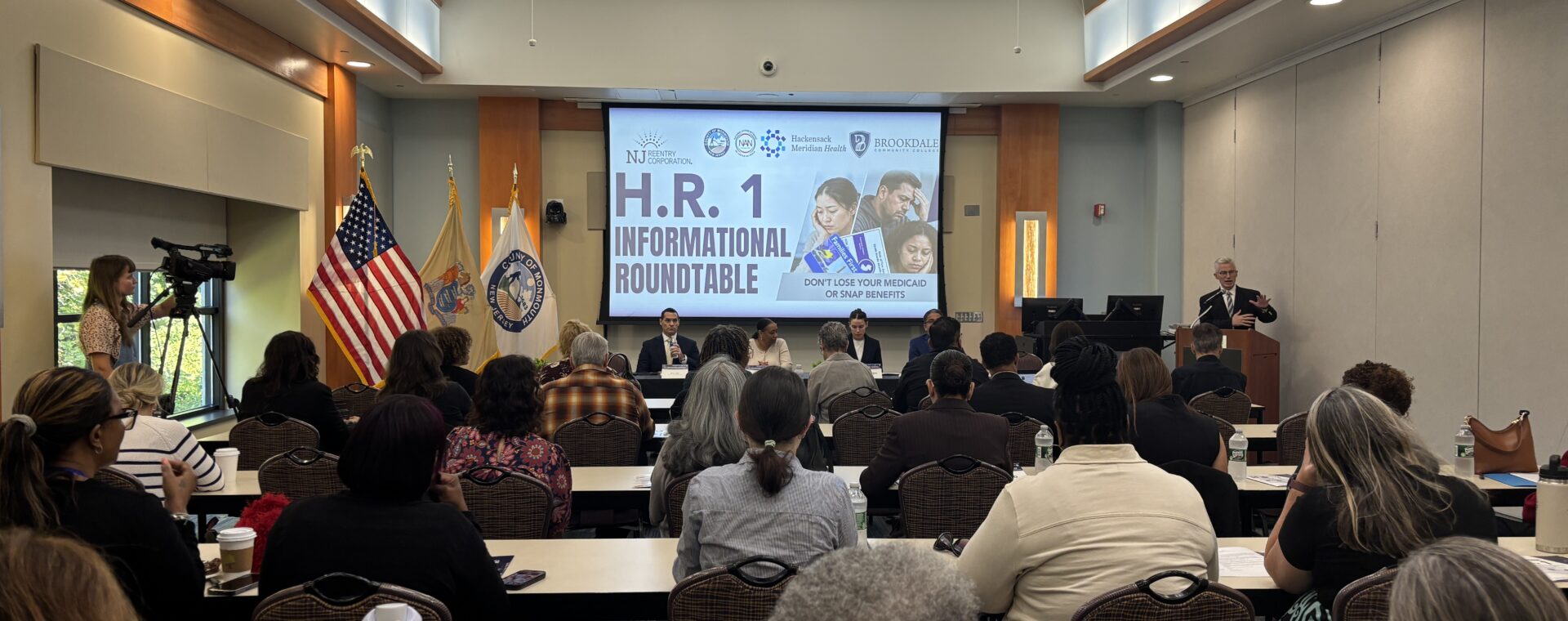
More than 50 community organizations and agencies from Monmouth County and across New Jersey gathered at Brookdale Community College for an informational roundtable focused on new federal Medicaid and Supplemental Nutrition Assistance Program (SNAP) requirements and what they will mean for the people they serve.
Hosted in partnership with the New Jersey Reentry Corporation (NJRC), the roundtable brought together professionals working across health care, workforce development, behavioral health, social services and community support to examine the new work and community engagement requirements established under H.R. 1.
Former New Jersey Governor Jim McGreevey, chairman of NJRC, moderated three panels addressing the questions organizations will increasingly face: What does the law require? Who is affected? Who is exempt? What activities count? How will employment, education, training and community service be documented and verified? And how can organizations help people remain eligible for the benefits they rely on?
“There is an obligation to document,” McGreevey emphasized, describing implementation as “a community issue” that will require organizations across Monmouth County to work together.
That community approach was reinforced throughout the roundtable as panelists discussed the role of county government, nonprofits, health care providers, workforce organizations, educational institutions and houses of worship in helping residents navigate the changes.
The new Medicaid community engagement requirements are scheduled to take effect in New Jersey on January 1, 2027. The requirements apply to certain adults ages 19 through 64 enrolled through the Affordable Care Act Medicaid expansion population and generally require 80 hours per month of qualifying work or other activities, such as education, job training or community service.
Understanding What Counts
The first panel focused on the requirements themselves and what individuals will need to do to demonstrate compliance.
Brian McGilbray of NJRC emphasized that meeting the requirement is only part of the equation. Individuals must also be able to document qualifying activities so they can be verified.
Work can include paid employment and self-employment, while qualifying workforce and training programs, education and structured community service can also count toward the requirement. Organizations providing those opportunities may play an important role in maintaining records that participants can use to demonstrate their hours.
Panelists stressed that documentation could become one of the most significant challenges for the people they serve. Individuals may be working, attending school, participating in training or volunteering and still encounter problems if that activity cannot be verified.
NJRC representatives said they are already seeing that issue with SNAP, including cases in which individuals have lost benefits because documentation was missing rather than because they failed to meet an underlying requirement.
Building a Community Response
The second panel examined what implementation could mean for Monmouth County and the network of organizations serving its residents.
The discussion highlighted the need to identify employment, education, workforce training and community service opportunities throughout the county so individuals have meaningful ways to meet the requirements.
Brookdale is positioned to be part of that network through the College’s Continuing and Professional Studies programs, which provide workforce development, career training and professional education opportunities designed to help individuals build skills and prepare for employment.
County workforce representatives also discussed efforts to expand the number of qualifying activities available to residents. Community organizations were encouraged to identify programs that could potentially help individuals meet the requirements and to work collaboratively to connect people with appropriate opportunities.
Monmouth County Commissioner Susan M. Kiley highlighted Monmouth ACTS, the county’s initiative designed to connect residents with human services and community resources, as an important part of that collaborative approach.
The discussion underscored a central theme of the morning: no single organization can address the changes alone. Government agencies, nonprofits, colleges, health care providers, treatment organizations, employers and faith-based groups each interact with different populations and can help ensure information reaches people before they risk losing benefits.
Understanding Exemptions
The third panel focused on exemptions and the importance of determining early whether an individual is subject to the work and community engagement requirement.
Panelists discussed exemptions involving medical conditions, mental health, substance use treatment and veterans, emphasizing that qualifying for an exemption may itself require documentation.
For some medical exemptions, panelists explained, having a diagnosis or condition alone may not be enough. Documentation may need to establish how that condition affects an individual’s ability to work or participate in qualifying activities.
That makes health care and treatment providers important partners in the process.
Preparing Now
NJRC is working to incorporate the new requirements into the services it already provides to individuals returning from incarceration and others facing barriers to employment. Its approach includes educating clients about the requirements, helping them maintain current contact information, connecting them with employment and training opportunities and assisting with the documentation needed to demonstrate compliance.
The organization also offered to provide additional training to community organizations and encouraged partners to share information about programs and resources that could help residents meet the new requirements.
The roundtable at Brookdale was designed to begin that preparation before the Medicaid requirements take effect.
For Brookdale, hosting the discussion also reflected the College’s broader role as a community resource. Through Continuing and Professional Studies and its partnerships with employers and community organizations, Brookdale provides workforce development and career training opportunities that can help residents gain skills, pursue credentials and move toward employment.
For the organizations gathered at Brookdale, the takeaway was not simply to understand a new federal requirement, but to prepare together.
As McGreevey emphasized, this is “a community issue” — one that will depend on organizations across Monmouth County sharing information, connecting residents with opportunities and helping ensure that the people they serve understand both their responsibilities and the resources available to them.