 Tutoring
  OneCard
  Bookstore
  Library
  Canvas
  Self Service
  Email
Email  Office Apps
  HelpDesk
  Employee Hub
  NetID/Passwords
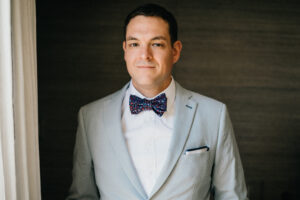 Brookdale Professor Explores the American Revolution Through Archaeology in New Book
More than two centuries after the American Revolution, Brookdale Community College Professor Matthew A. Kalos, Ph.D., is helping uncover new ways to understand the conflict through the physical evidence it left behind.
Kalos, assistant professor of Anthropology and Human Geography at Brookdale, is co-editor of The Archaeology of the American Revolution, a collection that examines the Revolutionary era through historical archaeology. The book brings together scholars who use artifacts, battlefields, landscapes, military sites, and other material evidence to reveal dimensions of the Revolution that traditional historical records may not capture.
Kalos recently discussed the book during a program featured on C-SPAN, joining contributors and fellow experts for a conversation about what archaeology can add to the study of one of the most extensively documented periods in American history.
“Thousands of books and articles have been written about the Revolution,” Kalos said during his introductory remarks. “It might seem that there is nothing new to say about this pivotal episode in American history. However, we disagree.”
Through archaeological techniques and new interpretations of material evidence, Kalos explained, the volume demonstrates that there is still much to discover.
“On the East Coast, traces of this bloody conflict are underfoot nearly everywhere,” he said.
Co-edited by Kalos and archaeologist Richard Veit, The Archaeology of the American Revolution brings together 15 chapters organized around three major themes: historical narratives and material culture, archaeological interpretations, and memory. The contributors represent established and emerging scholars as well as professionals working in cultural resource management, offering perspectives on Revolutionary sites on both land and sea.
The book also considers a long history of Revolutionary War archaeology. Researchers have studied sites ranging from military encampments and fortifications to battlefields and shipwrecks, including Jockey Hollow in New Jersey, Yorktown in Virginia, Lake Champlain, and Revolutionary War sites throughout the Northeast.
For Kalos, archaeology provides an opportunity to look beyond written accounts and consider how physical places and objects can expand the stories historians tell about the past.
That approach is also at the center of his research on Pennsylvania’s Paoli Battlefield.
On Friday, October 30, at 12:15 p.m., Kalos will present The Archaeology and Memory of Paoli Battlefield as part of the Pennsylvania State Historic Preservation Office’s free virtual Learn at Lunchtime lecture series celebrating Pennsylvania Archaeology Month.
His presentation will examine more than the battle itself. Using a layered landscape approach developed through his doctoral research, Kalos considers the physical and cultural history of the site, the battle landscape, and the ways the battlefield has been remembered and interpreted over time.
The presentation will also introduce audiences to conflict archaeology, a field that uses archaeological evidence to investigate warfare and its effects on people and landscapes. Paoli Battlefield will serve as a case study for demonstrating how that approach can contribute to a deeper understanding of the Revolutionary War era.
Kalos earned his Ph.D. from Temple University, where his doctoral research focused on the Paoli Battlefield. He is also a research fellow with the Center for Integrative Research in Conflict Archaeology, where his work explores the archaeology of memory as it relates to sites of conflict.
Published by the University Press of Florida in 2025, The Archaeology of the American Revolution comes as the nation marks the 250th anniversary of American independence, creating renewed interest in the people, places, and events that shaped the Revolutionary era.
For Kalos, that milestone also provides an opportunity to reconsider what remains to be discovered. The archaeological record shows that even after 250 years, the American Revolution still has new stories to tell.
Attend the Virtual Presentation
The Archaeology and Memory of Paoli Battlefield
Friday, October 30, 2026
12:15–1 p.m.
The presentation begins at 12:15 p.m. and will run approximately 20 minutes, followed by a question-and-answer session. The program is free and virtual, but advance registration is required.