 Tutoring
  OneCard
  Bookstore
  Library
  Canvas
  Self Service
  Email
Email  Office Apps
  HelpDesk
  Employee Hub
  NetID/Passwords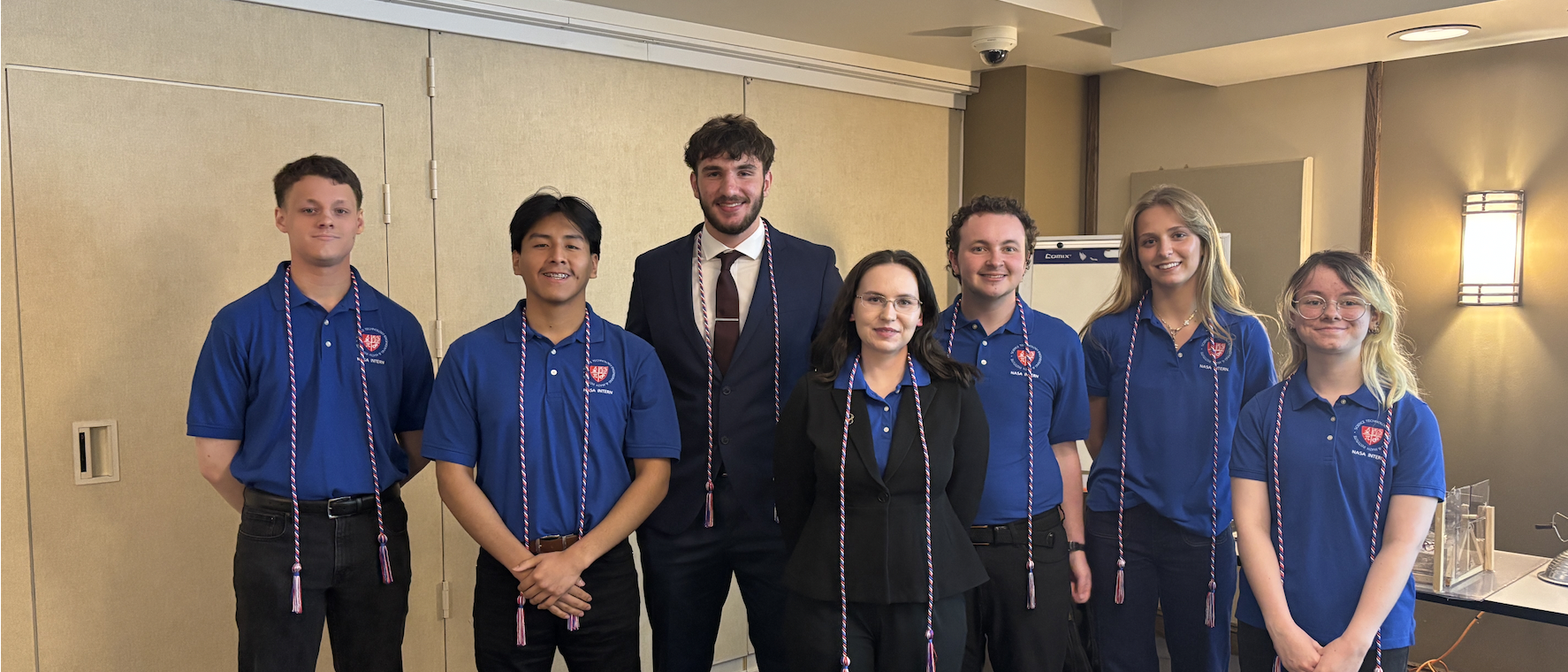
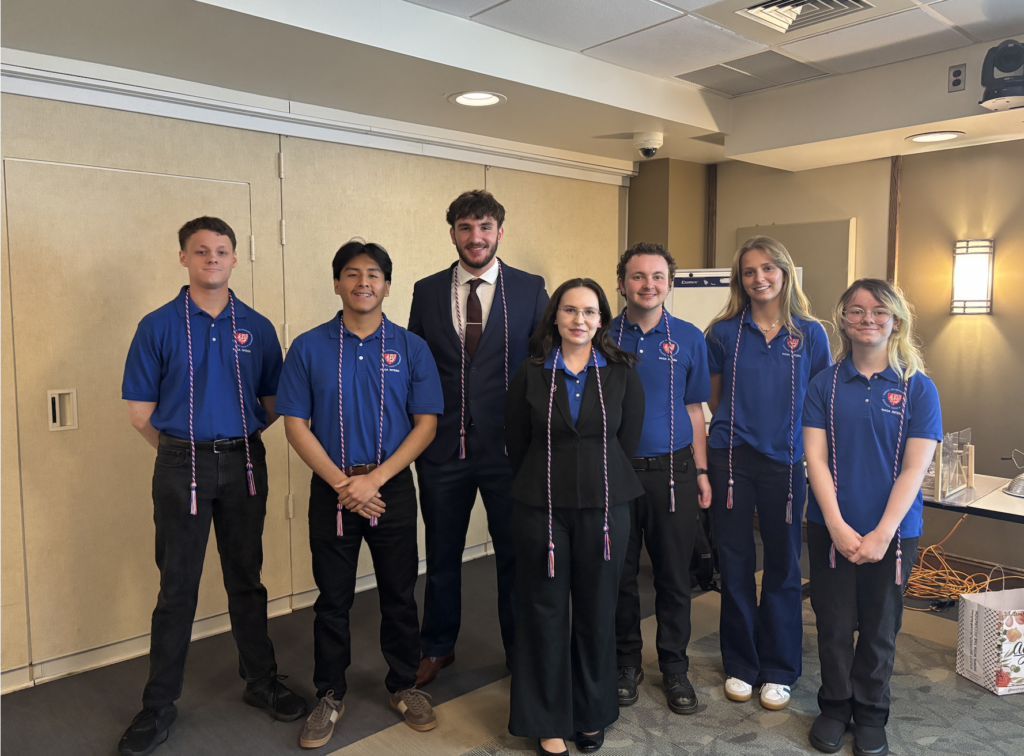
Brookdale Community College students are reaching for the stars through hands-on NASA research experiences that bring classroom learning to life. Through the NASA internship program, students work side by side with faculty mentors to design and lead their own original research projects in science, technology, engineering, and mathematics.
From exploring environmental sustainability to tackling challenges in space exploration, these student-driven projects reflect real-world innovation and discovery. Unlike many traditional programs, Brookdale students don’t just assist with research. They create their own projects, developing proposals, conducting experiments, and presenting their findings with confidence.
“What makes this program special is that students aren’t just assisting, they are leading,” said Professor Ana Teodorescu. “They are asking questions, building solutions, and gaining the kind of experience that prepares them for the next level.”
Supported by the New Jersey Space Grant Consortium, a NASA-funded initiative dedicated to advancing STEM education and research, Brookdale continues to stand out as a leader among community colleges. As one of the most active institutions in the consortium, and an affiliate partner, Brookdale consistently earns competitive internship placements and provides students with meaningful, hands-on research opportunities that rival those at four-year institutions.
This year’s NASA internship cohort brought bold ideas to life, showcasing the depth and diversity of Brookdale’s STEM talent. From concept to conclusion, each project reflects the curiosity, skill, and determination that define Brookdale students.
“These students are doing the kind of work you would expect at a four-year research institution,” said Professor Daniel Cooperman. “They are problem-solving, innovating, and presenting with a level of confidence that sets them apart.”
2026 NASA Internship Cohort – Students, Research & Key Findings
Katya Andrex
Algae-Based Biofertilizers as Sustainable Agriculture Solutions
Tested organic fertilizers made from algae. Her findings showed that certain algae types improved plant growth and yield, suggesting a more sustainable alternative to chemical fertilizers.
Adam Deinhardt
Quantum and Plasma Physics / PT Symmetry Research
Explored advanced physics concepts related to plasma physics. His work demonstrated that under certain conditions, signal strength can increase at critical points, offering potential applications in deep-space communication and energy systems.
Alexandra Kinsey
Impact of Sea Level Rise on Saltmarsh Sparrow Habitat
Analyzed coastal ecosystems in New Jersey. Her research concluded that even small increases in sea level can reduce nesting habitats, putting saltmarsh sparrows at serious risk, and highlighting the need for conservation efforts. Her research was supported through mentorship and collaboration with the NSF-funded Megalopolitan Coastal Transformation Hub (MACH) project, led by Rutgers University.
Jake Laird
Autonomous Dust Removal System for Solar Panels
Developed an autonomous system to maintain solar panel efficiency. His results showed that dust significantly reduces energy output, but automated cleaning can restore performance, offering a practical solution for long-term space exploration.
Cesar Sanchez
Evaluating the Feasibility of Vine Robots for Mars Exploration
Designed and built a soft robotic “vine robot” to explore difficult terrain. His research found that these flexible robots could safely navigate steep and confined environments like Martian caves, making them a promising tool for future space missions.
Christina Weber
Microplastic Bioaccumulation in Marine Copepods
Investigated how microplastics enter the food chain. Her research found that when food sources are limited, copepods are more likely to consume microplastics, increasing the risk of these pollutants moving through marine ecosystems.
Saylor Whiteman
Impact of Heavy Metals on Reproductive Success in Isopods
Studied environmental heavy metal pollution effects. The study found that longer exposure to heavy metals reduced reproductive success in terrestrial isopods, an accepted indicator of ecosystem health, showing how pollution can weaken ecosystem health over time.
These projects highlight what makes Brookdale’s program distinctive:
- Students lead their own research, not just assist
- Projects address both planetary science and space-based challenges
- Experiences translate directly to transfer success and career pathways
“This experience gave me the chance to take an idea and turn it into something real,” said Sanchez. “Designing my own project and presenting the results helped me see what I’m capable of and where I want to go next.”
The academic-year internship program at Brookdale would not be possible without great efforts exerted by Brookdale faculty such as this year’s mentors: Daniel Cooperman (Engineering), Rob Martens (Biology), Bob Gant (Biology), Spyro Roubos (Mathematics). The program is led by Professor Ana Teodorescu (Mathematics) and Dr. Juliette Goulet (Environmental Science) and has had consistent support in student mentorship from partner institutions such as Rutgers University (graduate students Janine Barr, Moira Scheeler, Morgan Zielinski), Dr. Christopher Ochs, formerly of Bell Labs.
The result is a cohort of students emerging as the next generation of scientists, engineers, and innovators, proving that groundbreaking research can begin at the community college level.
Learn more at Brookdale STEM Internships by New Jersey Space Grant Consortium